Shopping Cart



Follow us on social media…
© 2024 A-T Products. All Rights Reserved
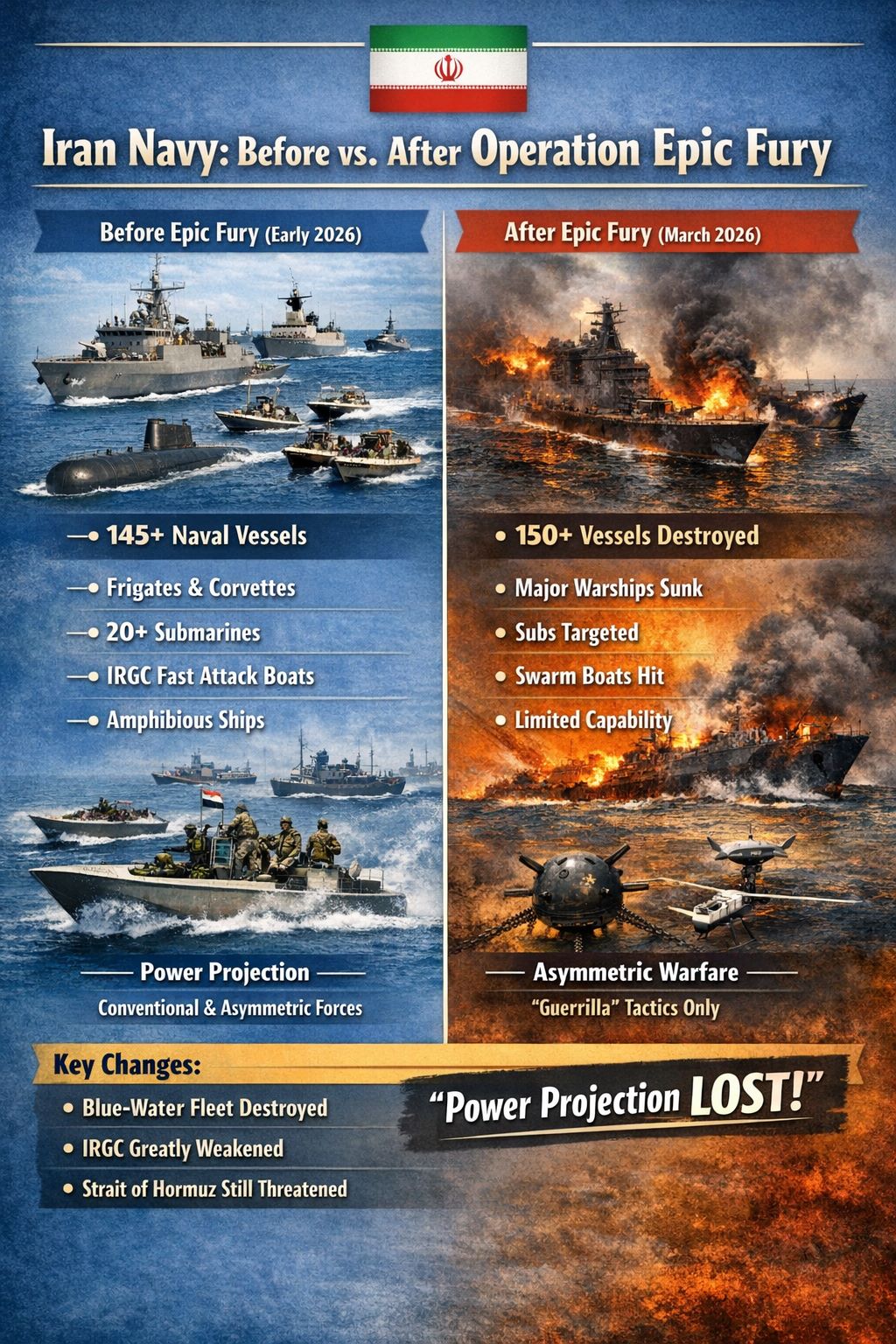
After all the information, both real and phony that we’ve seen recently, we decided to make an attempt to learn the truth about the current status of Iran’s navy. We purposed several AI platforms to search only reliable sources for this information.
Here’s a clear comparison of Iran’s naval forces before Operation Epic Fury (early 2026) vs. what remains today (late March 2026, after major strikes) based on current reporting.
________________________________________
Category
Total Naval Strength ~145+ combat vessels + hundreds of small craft (SlashGear)
Majority destroyed; 150+ vessels reportedly sunk (Axios)
Large Surface Combatants (frigates, corvettes) ~7 frigates, 3 corvettes (NST Online)
Nearly all destroyed (key ships like Sabalan, Dena, Makran lost) (RadioFreeEurope/RadioLiberty)
Submarines ~20–25 (Kilo-class + midget subs) (YouTube)
Some remain, but targeted and degraded (Defense Security Monitor)
Fast Attack Craft / IRGC Swarm Boats Hundreds (core of asymmetric strategy) (SlashGear)
Hundreds destroyed or damaged (Asia Times)
Amphibious & Logistics Ships ~40+ support/amphibious vessels (Wikipedia)
Many damaged or sunk; limited operational capability
Naval Aviation Small helicopter/transport fleet Largely intact but operational impact reduced (loss of ships)
Command Structure Dual navy system: Regular Navy + IRGC Navy (USNI News)
Leadership disrupted; IRGC Navy commander killed (New York Post)
Power Projection محدود (regional reach; occasional long-range deployments) “Completely lost ability to project power” (reported) (New York Post)
Primary Strategy Mix of conventional + asymmetric (mines, missiles, swarm tactics) Almost entirely asymmetric (mines, drones, harassment)
Control of Strait of Hormuz Strong harassment capability Still disruptive via mines, drones, small craft tactics (
RadioFreeEurope/RadioLiberty)
📉 Key Takeaways
1. Conventional Navy: Essentially Destroyed
• Iran’s blue-water fleet (frigates, large ships) has been almost completely eliminated.
• Losses include its flagship long-range vessels, ending meaningful global reach.
2. IRGC Navy: Severely Degraded but Not Gone
• The IRGC’s fast attack boat swarms—its most important force—have taken heavy losses.
• However, some small craft, mines, and drones remain, allowing continued disruption.
3. Shift to Pure Asymmetric Warfare
• Even before the conflict, Iran emphasized:
o Naval mines
o Anti-ship missiles
o Swarm attacks
• Now, that’s almost all it has left.
4. Still Dangerous Despite Losses
• Iran can still threaten shipping, especially in chokepoints like the Strait of Hormuz.
• Cheap, hard-to-stop tools (mines, drones) remain effective.
________________________________________
🧭 Bottom Line
• Before Epic Fury: A regional naval power with ~140+ vessels and a hybrid doctrine.
• After Epic Fury: A crippled fleet, with most large ships gone and reliance on guerrilla-style maritime warfare.